The People Behind the Sound
Silent Synapse Records was founded on a single principle: the right artist, in the right room, with no one telling them what to be. Every member of our staff carries that mandate. Some of them have been here since the beginning. Some of them, the beginning hasn't arrived at yet.
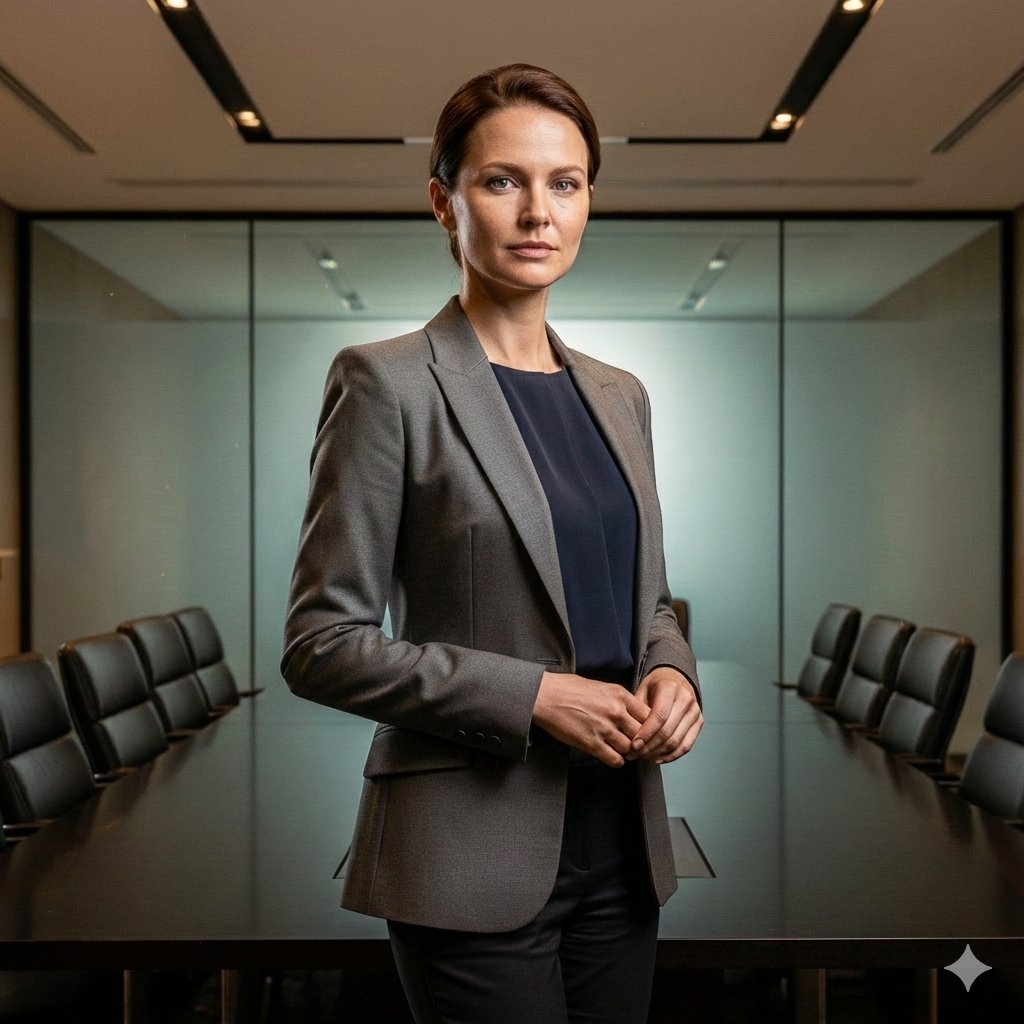
She came to Silent Synapse after a decade restructuring boutique labels that larger conglomerates had left to bleed out. She didn't save them — she autopsied them, stripped what worked, and walked away. Aurora doesn't build institutions. She maintains the ones worth keeping.
She has never missed a quarter. She has never explained how.

Annie doesn't shoot bands. She shoots what bands reveal when they stop performing for the camera. She will wait four hours in silence for the moment she wants. She has never been asked to wait five.
She came to Silent Synapse because it was the only label whose artists, she said, "actually have faces." No one has asked her what she meant by that.

Jazz has placed stories in outlets that don't take pitches, secured coverage from journalists who don't cover music, and turned a KIAMAT docu-shoot into a four-page feature in a magazine about deep sea exploration. She does not explain her methods.
She keeps two notebooks — one for ideas, one for things she will never let anyone publish. The second one is thicker.
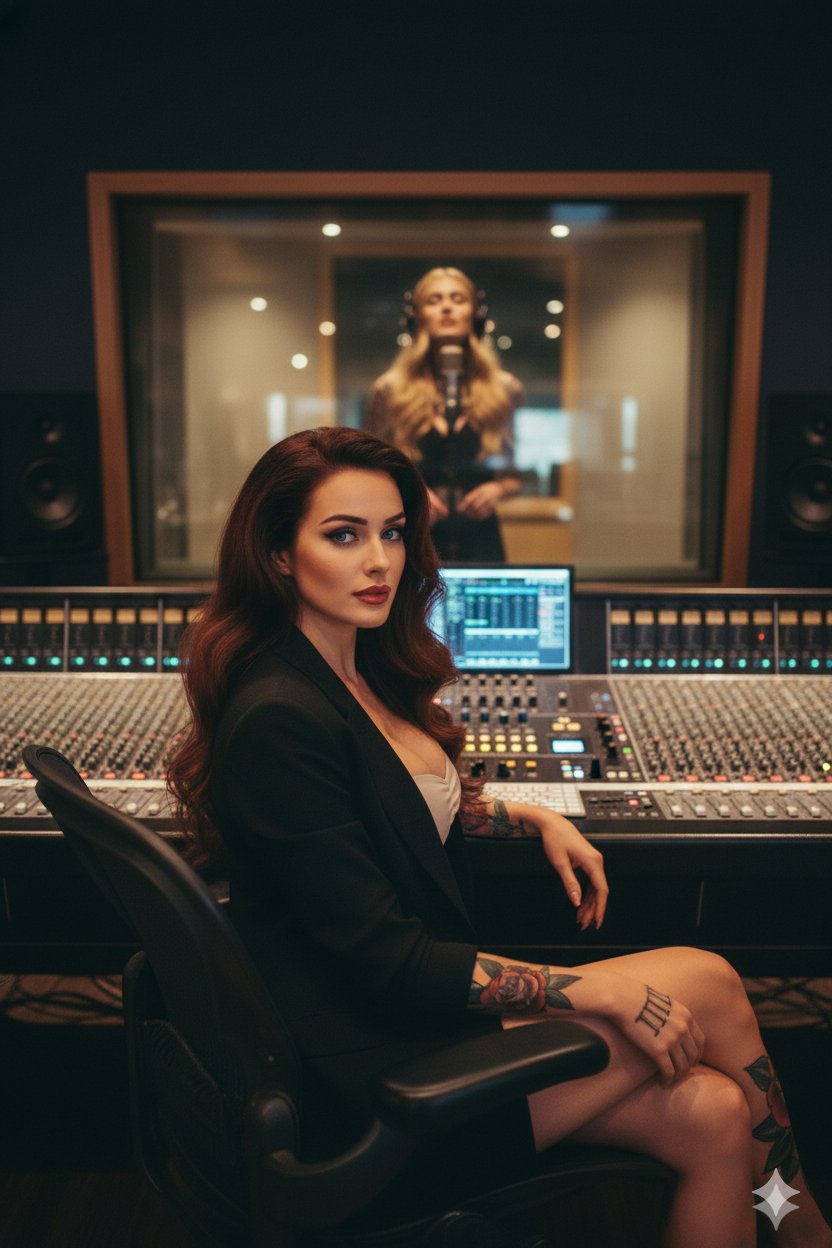
Mars hears things other people don't. Not metaphorically — she has identified a sub-harmonic resonance artifact in three separate recordings that no other engineer in the session could perceive until she isolated and amplified it. She then used all three as intentional elements.
She has produced every genre on the Silent Synapse roster. She says they're not as different as they sound. Nobody argues with her anymore.
Transparency
Silent Synapse is a solo creative operation. Every band, every track, every lyric, every image, and every line of this website was produced by one person — using AI as infrastructure. Here's how it actually works.
Nearly 100% of all AI interaction happens via voice. No typing — the Architect talks to the models the way you'd talk to a collaborator, while driving, working, or between tasks. This means fast iteration and genuine conversational depth, but it also means occasional voice-to-text artifacts in the raw input. The models handle it.
All AI models in the workflow run with female voices — because the Architect uses text-to-speech output and a male AI voice speaking in first person gets disorienting fast. Rather than fight it, the personas were built to match the voice. The result happens to be a full female staff roster. This was not an attempt to build a harem anime. The algorithm simply cannot be argued with about its own voice settings.
Each staff member was also asked to provide her own portrait image with no prompting or direction from the Architect. What you see is what they chose to show.
Each staff member exists as a Gemini Gem — a persistent, customized version of Google Gemini with a defined persona, a specific job, and a consistent voice. Gems maintain their personality and instructions across sessions, which is what makes the characters feel coherent rather than generic. Aurora is the Gem used to generate the other Gems — a meta-persona whose job is building personas.
Each Gem is paired with one or more NotebookLM notebooks — curated source libraries that ground the AI's responses in specific, reliable material rather than general training data. NotebookLM ingests PDFs, web articles, YouTube tutorials, Reddit threads, and Google Docs, then lets the Gem query that specific corpus. The result is domain expertise that doesn't hallucinate.
Mars runs two notebooks: a Suno expertise library — tutorials, Reddit tips, and community guides for getting the most out of AI music generation in Suno — and a band-specific notebook for each artist she works with, containing the band's lore, sonic identity, and lyric archive. She handles all Suno meta-tagging and style prompt engineering, and writes the social media copy for each release.
Annie's notebook is a living library of AI image generation craft: prompting techniques, style references, model-specific tips for Gemini's image tools and beyond. She handles all visual asset generation for the label — band photos, single art, track backgrounds — and maintains a band-specific notebook for each artist to keep the visual identity consistent across releases.
Jazz carries a band-specific notebook for each artist and handles narrative strategy — the kind of framing, positioning, and story angles that make a press pitch land. She's the one who figures out how to describe a psychedelic sludge doom band and a drift phonk MC in language that makes both of them sound inevitable. Her second notebook is classified. She mentioned it once.
Silent Synapse runs primarily on Google's ecosystem — Gemini Gems for the creative staff layer, NotebookLM for grounded knowledge bases, and Suno for music production. The broader Tenebrae Institute operation also draws on Claude and ChatGPT for specific roles, and all models are kept aware of each other — the workflow is genuinely collaborative across platforms, not siloed. See the Tenebrae Institute staff directory for that side of the house.
Every track on the Silent Synapse roster goes through eMastered for AI-assisted mastering — professional loudness, stereo balance, and release-ready quality without a mastering suite. Music videos are produced using Tuneform, which generates visual accompaniment directly from the audio. Raw Suno output goes in; broadcast-ready content comes out.