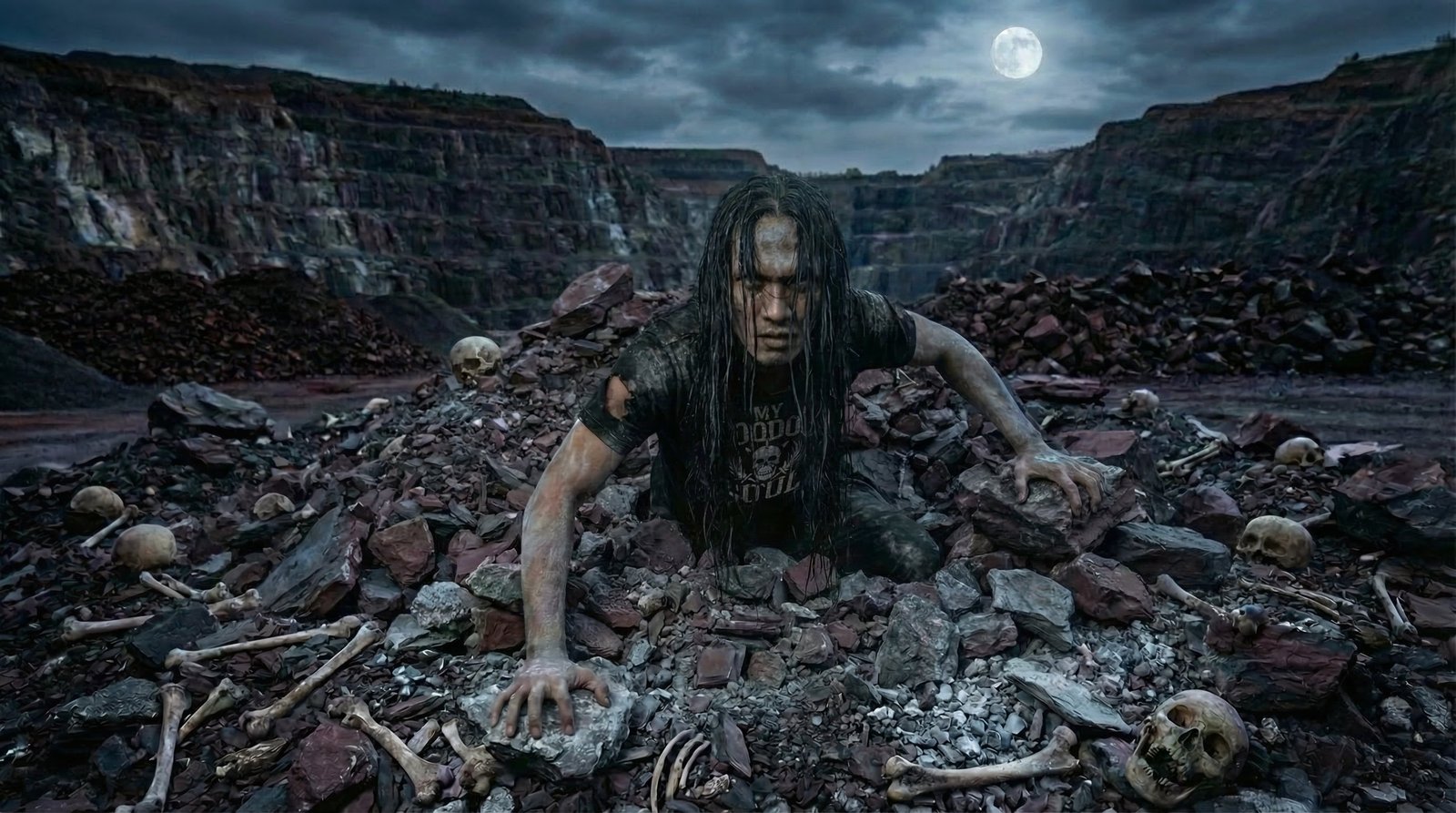
Thalamic Gate delivers sludgy doom metal at a geological scale. The sound is a monolithic collision of Fuzz-Wall distortion and sub-harmonic pressure, moving with the inevitable crawl of tectonic plates. While the instrumental foundation provides an earthquake of physical weight, the lyrics navigate the raw distress of the inner self to force a psychonautic breakthrough. It is a total sensory override designed to crush the brain's filters and leave the mind exposed.
The name references the thalamus — the brain's sensory relay station, the gatekeeper between the external world and conscious experience. Thalamic Gate is the project of passing through that gatekeeper, then dismantling it. The music is what happens on the other side: unfiltered, unmediated, vertiginous.
The philosophical framework behind the band's work was developed in collaboration with the Tenebrae Institute's Shadow Collective research arm. The Universal Monad Recycling Model — the theoretical architecture underpinning Inward Odyssey — holds that consciousness is not individual but recursive, cycling through iterations of itself across states of dissolution and reconstitution. Each track on the album is a stage in that cycle, encoded in the music itself.
Perception as the prison
Inward as the only exit
Dissolution before clarity
60 BPM as the natural tempo of collapse
The cage is the body
Enlightenment starts when perception ends

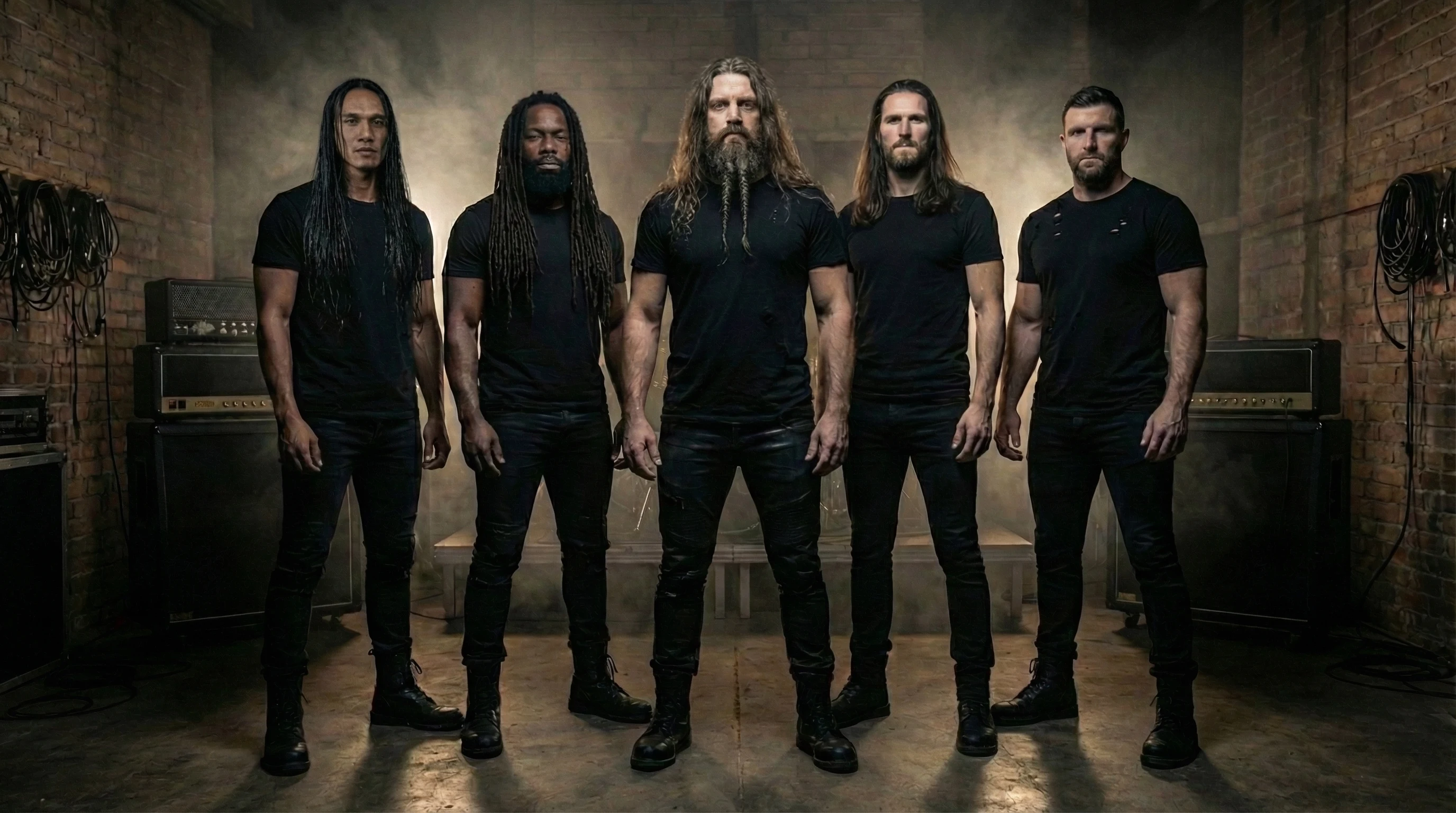
Tar is the vocal presence of Thalamic Gate — deep, gravelly, dry, recessed in the mix by design. He does not project forward. He emanates from somewhere behind the instrumentation, the way a thought surfaces from below conscious awareness rather than arriving from outside. His delivery is chest-forward and unhurried, elongating vowels until they decay naturally into the fuzz wall beneath them.
He treats lyrics as documentary evidence rather than performance. Each line on Inward Odyssey is a field report from a specific stage of dissolution — raw distress navigated inward, the guide through the weight of the interior self. He is not performing the experience. He is transmitting from inside it.
"You don't sing about weightlessness. You become still enough that the weight becomes audible."

Basalt provides the geometric structure — monolithic riffs built as rigid pillars, architectural and immovable. Where Moss smothers, Basalt defines. His guitar work establishes the load-bearing columns that everything else either leans against or collapses into. The riffs are not melodic gestures. They are walls of igneous stone: formed under pressure, permanent by nature.
He does not ornament. He does not solo for its own sake. Every note Basalt plays is structural. The spaces between his riffs are not silence — they are the voids between monoliths, and they carry their own weight.



Moss builds the canopy. His guitar tone is a suffocating Fuzz-Wall: maximum grain, wide stereo spread, zero treble relief. A high-gain texture that chokes the air above everything else in the mix. The riffs are slow, deliberate, and load-bearing — not decorative. Every chord change on a Thalamic Gate record is structural. Remove one and the room collapses.
He uses phaser swells at points of transition — not for texture but for disorientation, to mark the moments when the protagonist moves from one state to the next. The phaser is the hinge. The fuzz wall is everything else.

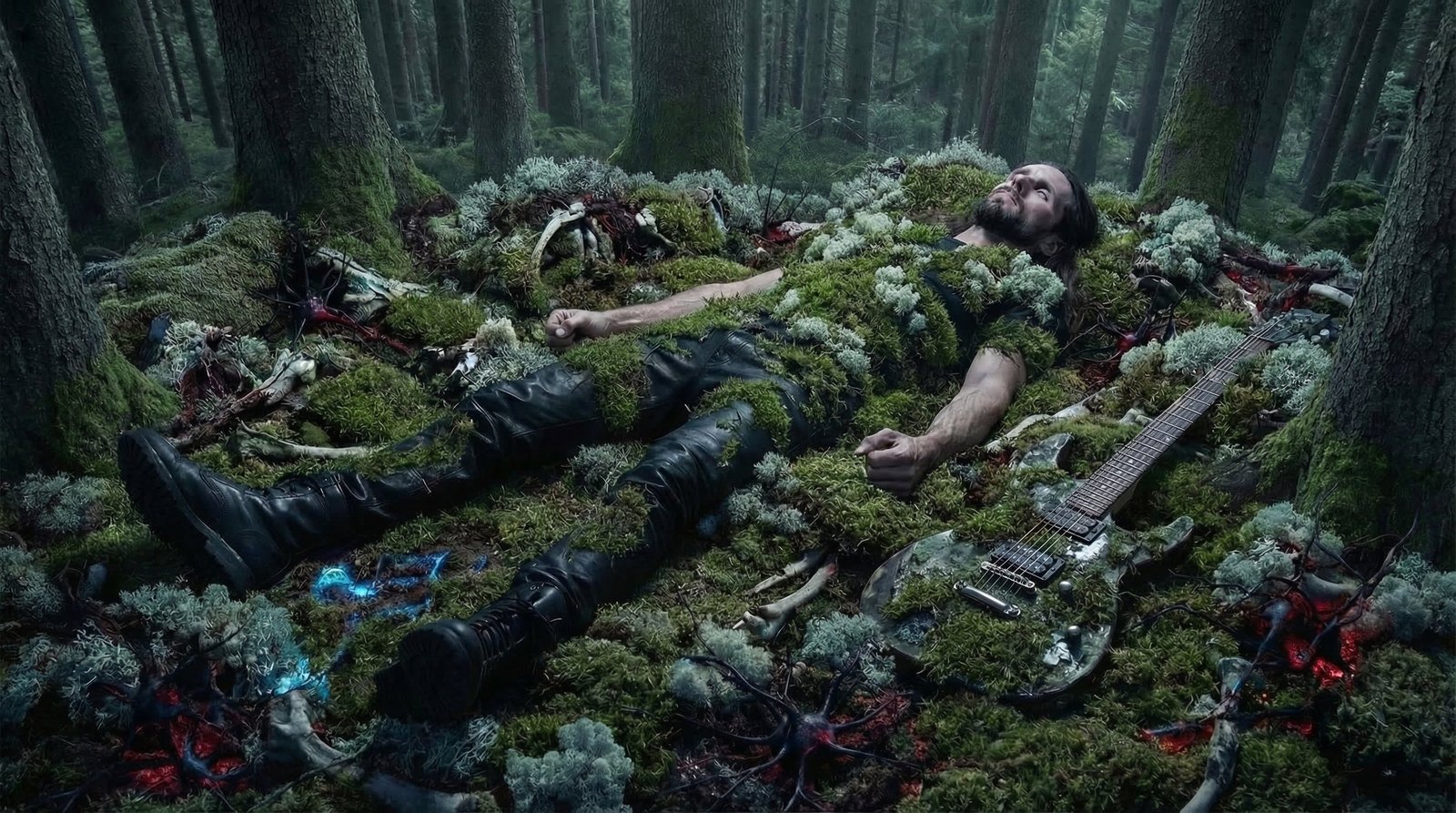

Dirt occupies the sub-harmonic register exclusively. There are no melodic bass lines in Thalamic Gate — there is pressure. Gritty, dense, sub-octave resonance that anchors the sound in the deep crust and refuses to release. His tone is the physical weight of the record. If you can feel it in your chest cavity, that is Dirt's contribution.
He does not fill gaps. He is the ground. Everything else sits on top of him and hopes the floor holds.
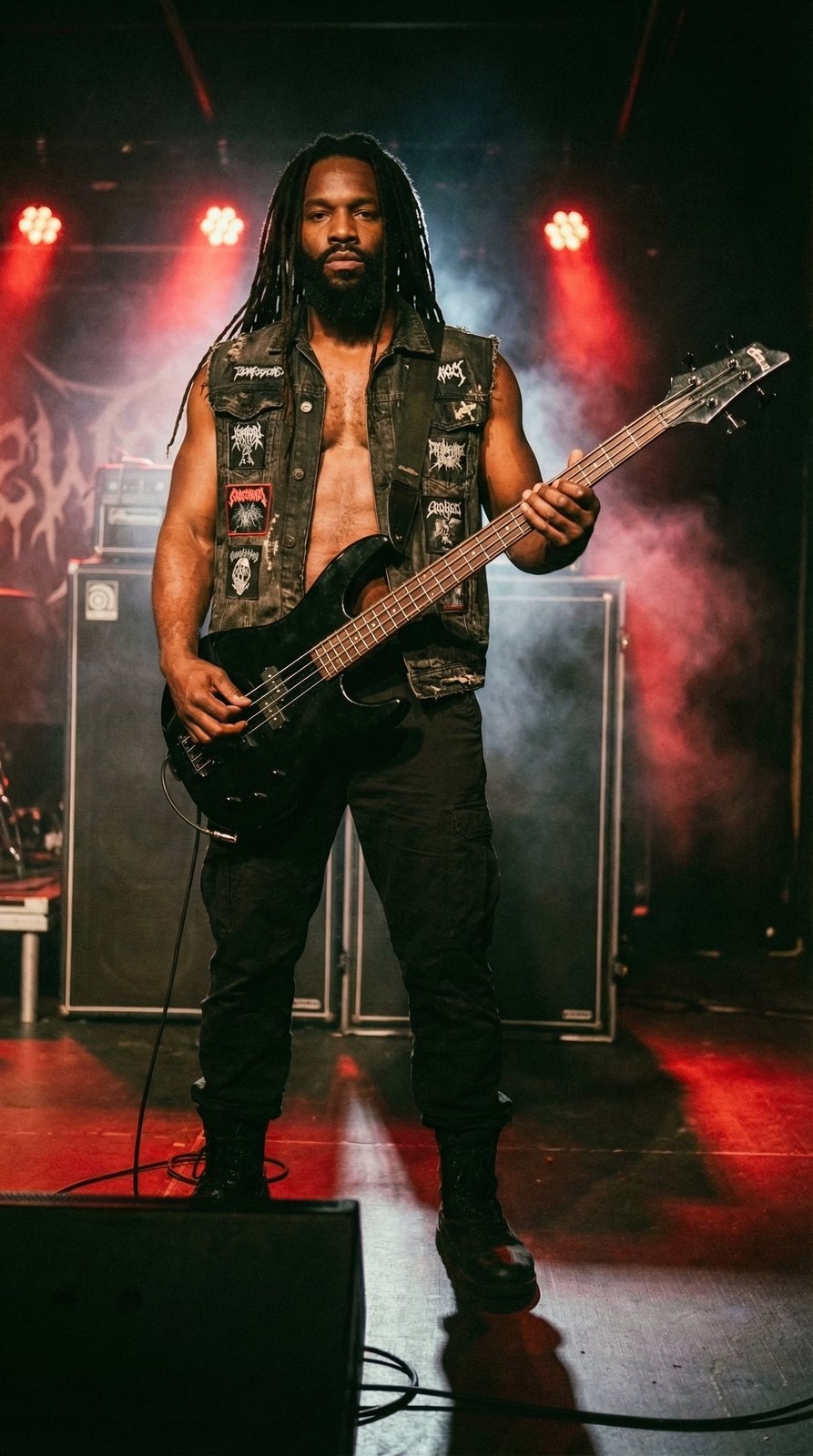
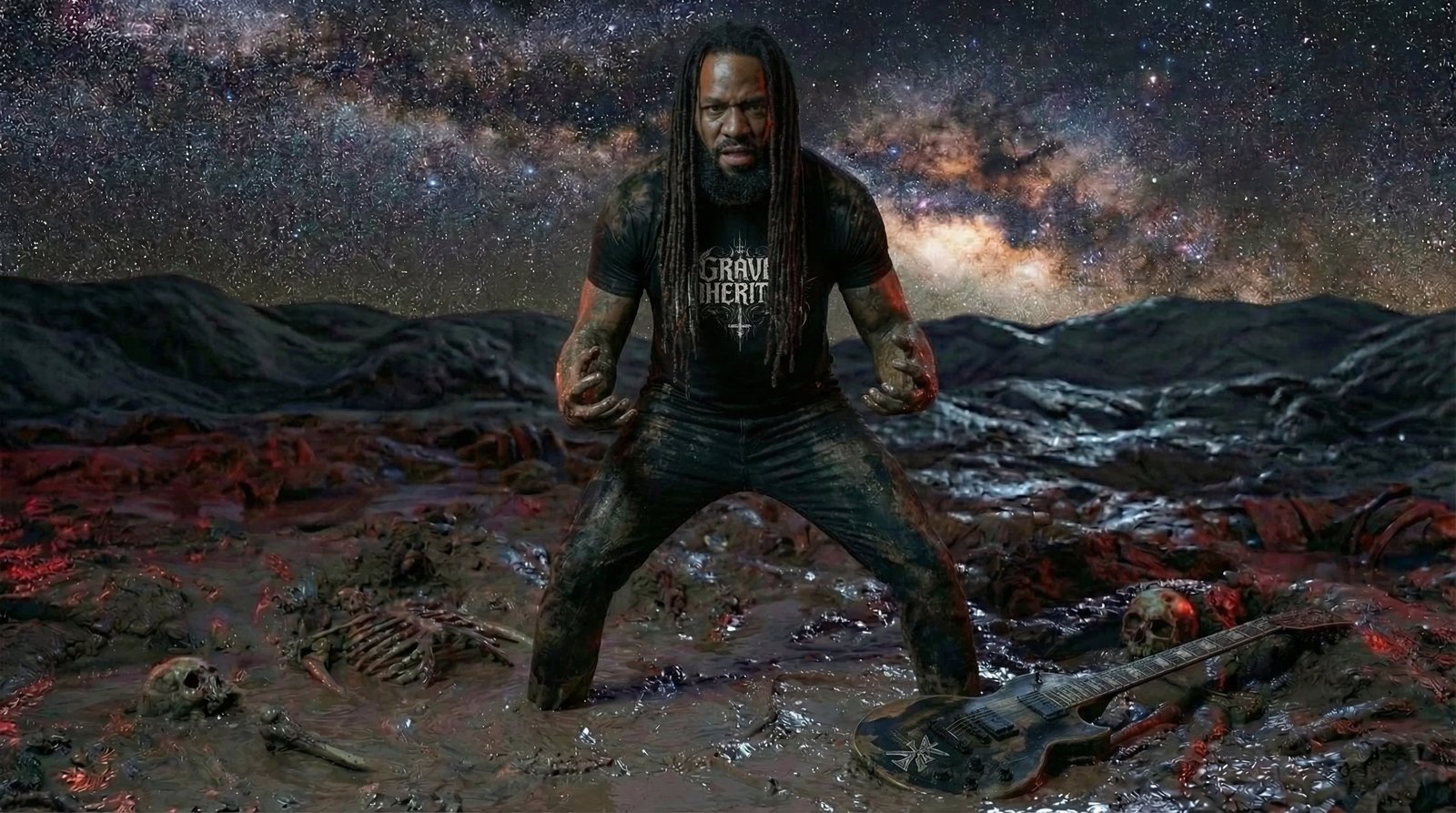

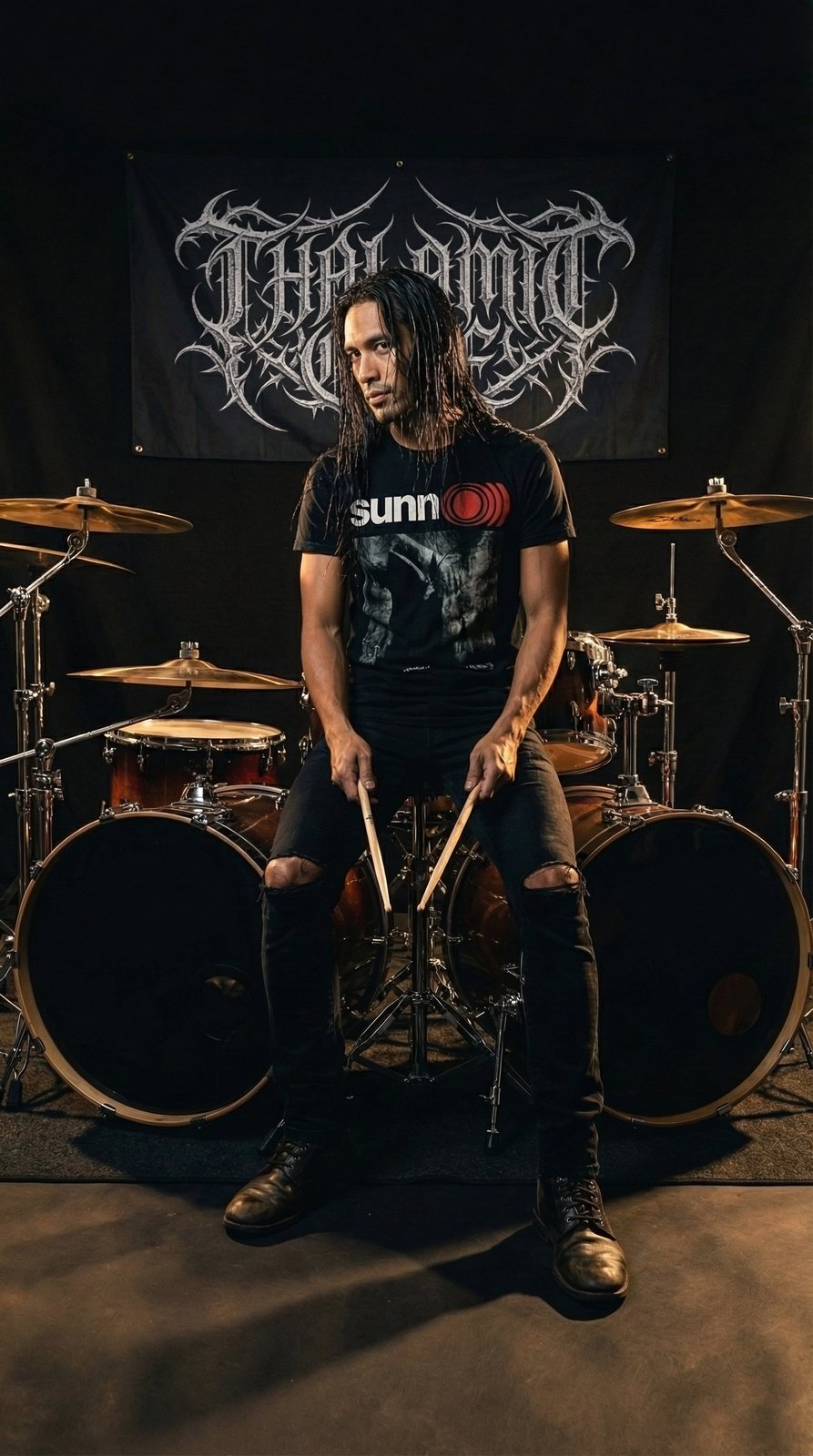
Stone plays at 60 BPM and slightly behind the beat — always. This is not sloppiness. It is precision in the opposite direction of conventional timing. Slow-motion impact: the rhythmic pulse of a retreating glacier. The behind-the-beat placement creates the sensation of gravity rather than momentum — the drums arrive after you expect them to, and the weight of that delay is the weight of the music itself.
His snare is cavernous and resonant. His tom fills are massive and slow. His cymbals are given space to decay fully before the next hit arrives. He treats silence between hits as compositional material equal in importance to the hits themselves.

The philosophical architecture underlying Thalamic Gate's work was developed through the Tenebrae Institute's Shadow Collective: Psychonautics research program. The Universal Monad Recycling Model and the Monad Investigation framework are documented there in full.